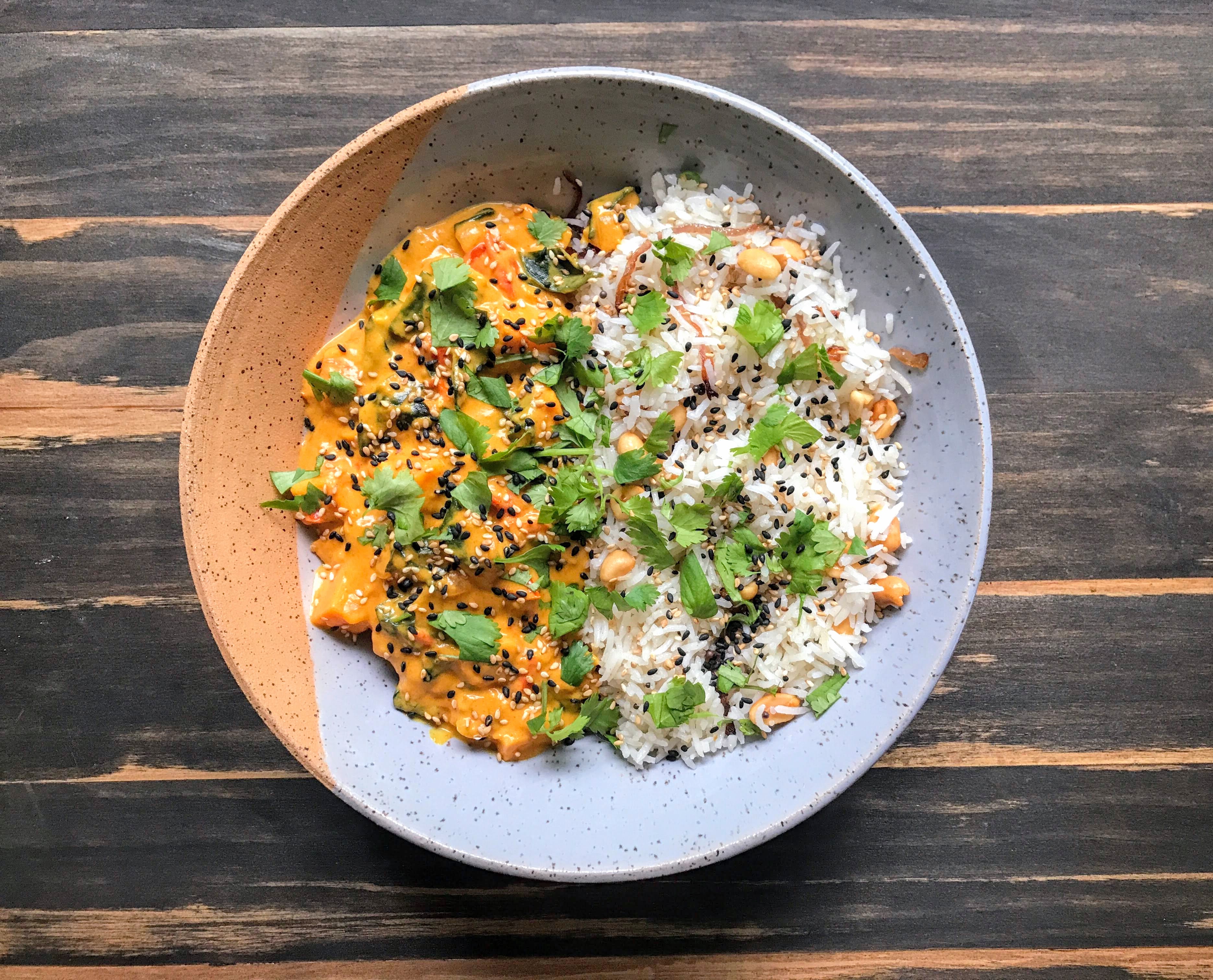
One of the most magical ingredients in my (any?) pantry is coconut milk. (Full-fat, do not come at me with any other nonsense.) It is SO versatile, in addition to being absolutely delicious! If you’ve got a can of coconut milk and a vegetable lying around (like, any vegetable), you’re never more than 20 minutes away from a satisfying meal. And isn’t that just a lovely, comforting thing to know?

Coconut milk + veggies is also, for me, the quickest route to a vegan meal. I don’t think I’ve ever actually made a vegan meal on purpose. (Vegetarian, yes, but vegan not so much.) But as often as not, it hits me when I’m eating one of these curry-esque meals that, “hey, this is vegan!” I’m just aiming for delicious flavor, and the animal product-free nature of the recipe is a happy accident. (It is also a very handy thing to keep in one’s back pocket in case you’re ever hosting vegan guests. Or non-vegan guests, because this shit is good.)
Before we get to the recipe, a note on language: “curry,” according to one of my faves Priya Krishna, isn’t really a “thing.” (Do you have her book, Indian-ish? It’s delightful, so is she, and so are her absolutely adorable parents.) The term was popularized by colonizers using it as a catchall for the wide range of stews they encountered in India. So why am I using it here? Mostly because although I’m not using either curry powder or curry leaves in this particular recipe, I think “curry” gives a better sense of the kind of flavors to expect from this meal than “stew” would. (If someone told me they were making a veggie stew, I’d anticipate something very different than what I’ve made here, even though it wouldn’t be an inaccurate way to describe the dish.) And as far as I know, this concoction comprised of lingering veggies in my crisper isn’t a specific, named dish anywhere. But language is complicated. And powerful! And cooking food using recipes and flavor profiles from cultures not one’s own is complicated, especially as a white woman. I cook foods that taste good to me, adapted based on what I have at home and the cooking techniques I have in my arsenal. I’m really grateful that there are people who know a lot more about the flavor profiles and techniques to which I’m drawn, because without them I wouldn’t know anything about the foods I love most in this world. Sharing anything creative across cultures is tricky, and food is no exception. I don’t think anybody has it all figured out, but I’m thankful that people far wiser than I are thinking and talking about it. In the meantime as I read and listen to that wisdom, I’m going to do my best to acknowledge the cultures and traditions from which the flavors with which I work come, and to lift up the chefs of color to whom I look for guidance and inspiration. (It is not a coincidence that almost all of my favorite cooking blogs are written by women of color.) Today that includes Priya, whose chile peanut rice recipe I used as the base to accompany my curry. Even minus the ingredients I didn’t have on hand, it is SO good and even though I have leftovers in the fridge (hello, lunch), I’m already dreaming about when I’ll get to make it again.
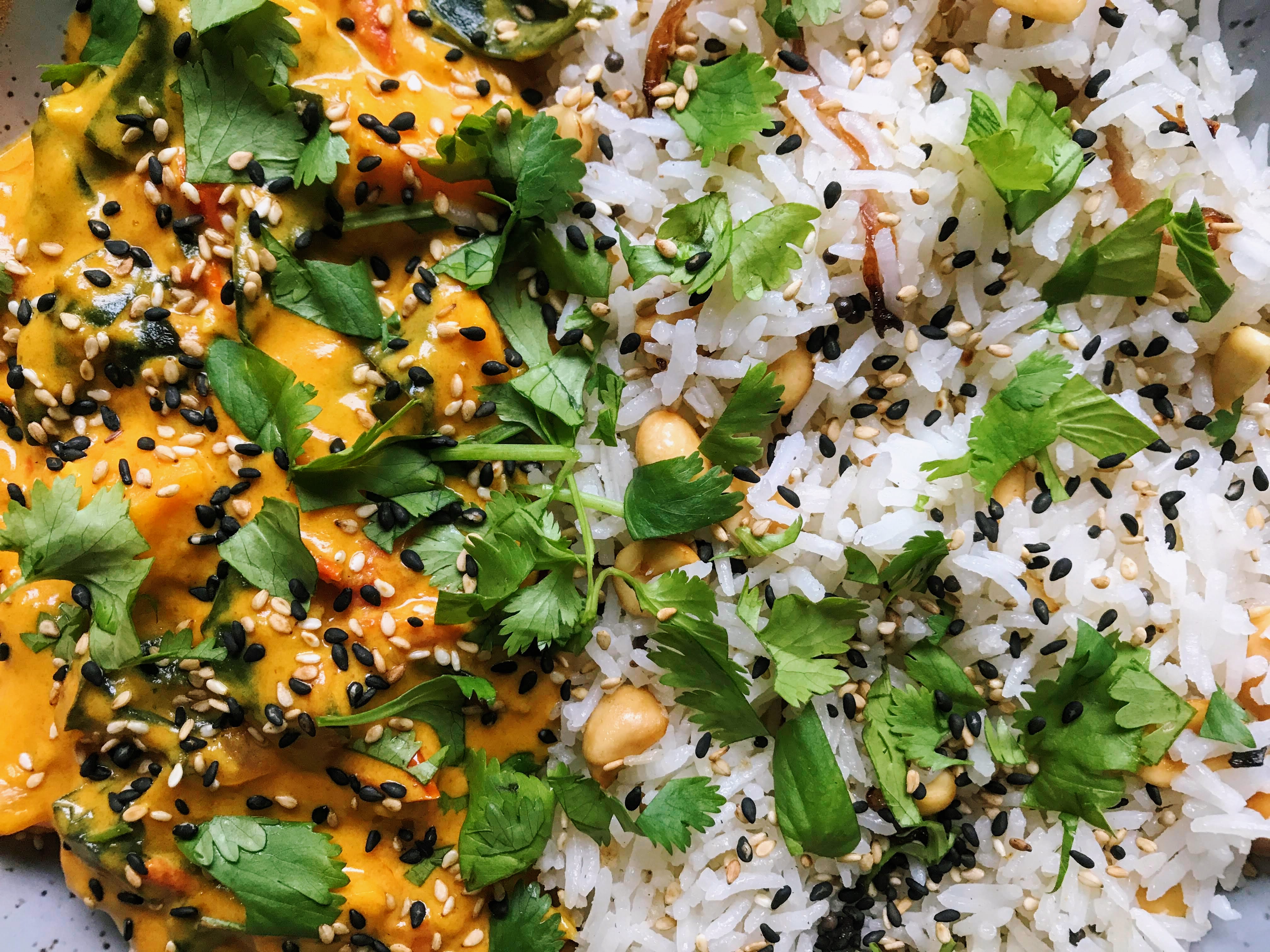
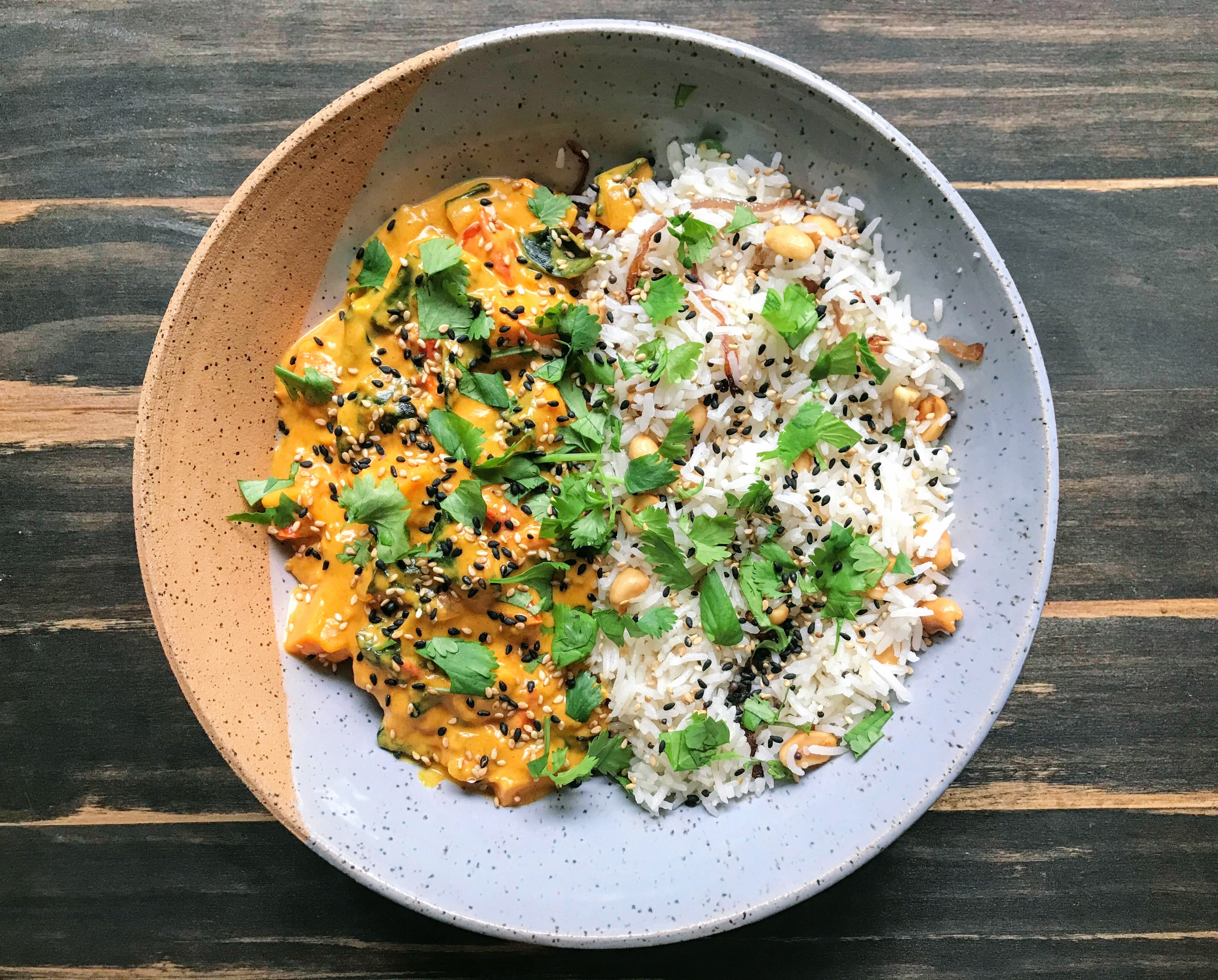
Vegan Veggie Coconut Curry with Cilantro Peanut Rice
- 3 T. Olive Oil
- 1 Onion, chopped (I used red onion because it’s what I have, but any onion will do)
- 4 cloves Garlic, minced
- 1 T. Tomato Paste
- 1 T. Turmeric
- 2 t. ground Ginger
- 2 t. ground Fenugreek
- 1 T. Cumin
- 1 t. Salt
- 1 pint small Tomatoes, chopped (cherry, grape, etc.)
- 1 Sweet Potato, peeled and diced
- 1 can Coconut Milk
- 2-3 c. Kale, ribs removed and roughly chopped (I prefer lacinato/dinosaur kale, but any kind is fine)
- Cilantro Peanut Rice, see below
- Cilantro, chopped, as garnish
- Black and White Sesame Seeds, as garnish
In a large saute pan, heat olive oil over medium-low heat. Add onions and cook until translucent, then add garlic and cook a minute or two longer. Stir in tomato paste, followed by turmeric, ginger, fenugreek, cumin, and salt. Cook about 1 minute, until paste has slightly darkened and spices are fragrant. Add tomatoes, sweet potato, and coconut milk, scraping up any cooked-on bits (fond) on the bottom of the pan. Bring to a low simmer and cook, stirring occasionally, until sweet potatoes have begun to soften but are not fully ready. Stir in kale leaves, and cook until kale has softened and potatoes are tender. Season with salt to taste. Serve on Cilantro Peanut Rice (see below) and topped with additional cilantro and sesame seeds.
Cilantro Peanut Rice (minimally adapted from Bon Appetit/Indian-ish)
I simplified Priya’s recipe and adapted it to the ingredients I had available in my kitchen, but I’m very much looking forward to making it as originally written next time I have curry leaves and chiles on my hands!
- 1.5 c. Basmati Rice
- 1/2 c. Avocado Oil
- 1 medium Onion, halved and thinly sliced
- 1 T. Black Mustard Seeds
- 1 c. Roasted, Unsalted Peanuts
- 1 t. Salt, plus more
- 2 T. fresh Lime Juice
- 2 T. chopped Cilantro leaves with tender stems
Cook rice with a big pinch of salt; set aside to keep warm while preparing other ingredients. In a shallow pan over medium heat, heat oil and add onion; cook, stirring occasionally, until onion has begun to caramelize. Add mustard seeds; once they begin to move around (this shouldn’t take long), reduce the heat to medium-low and add peanuts. Cook, stirring, until peanuts are fragrant and slightly darkened. Stir mixture into rice, then stir in salt and lime juice. Adjust seasoning to taste and garnish with cilantro to serve.
 Law and Lentils
I’ve had this and it’s delightful.